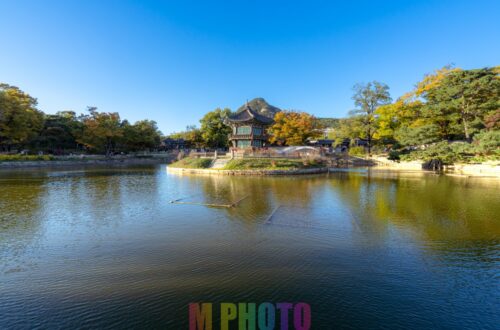
Injeongjeon Hall Changdeokgung Palace
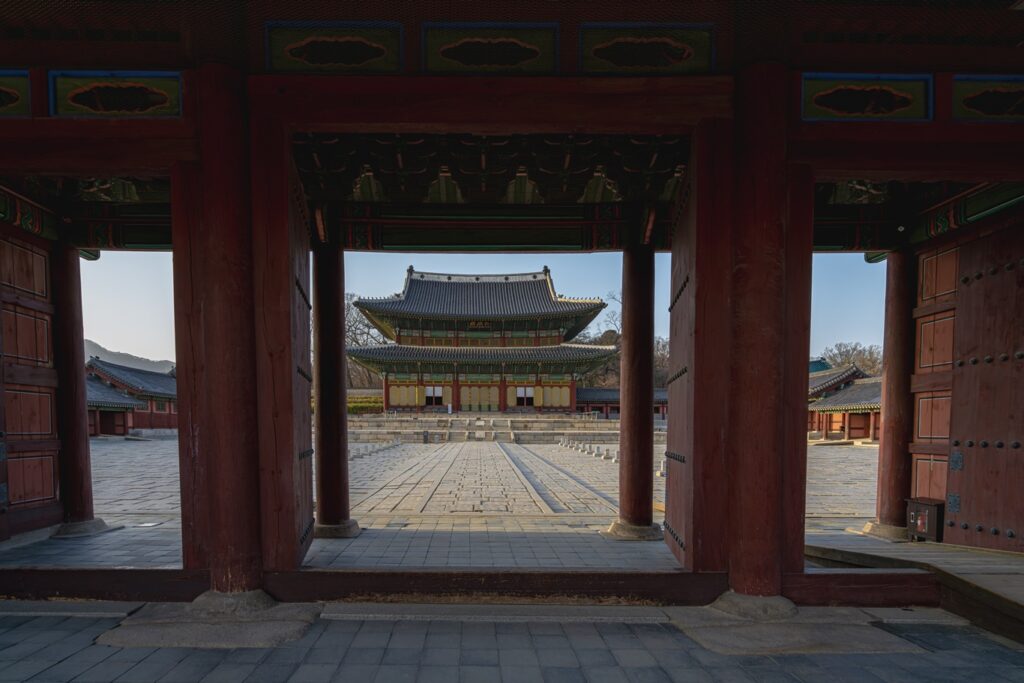
Injeongjeon – History, Introduction, and Interior Structure
History
Injeongjeon Hall is the main throne hall of Changdeokgung Palace, one of the most important royal palaces of the Joseon Dynasty in Korea.
Built in 1405 during the reign of King Taejong
Destroyed during the Japanese invasions of Korea (1592–1598)
Reconstructed in 1609 under King Gwanghaegun
Functioned as the primary royal court when Changdeokgung served as the main palace in the late Joseon period
Throughout the dynasty, Injeongjeon was the central venue for major state ceremonies and official functions.
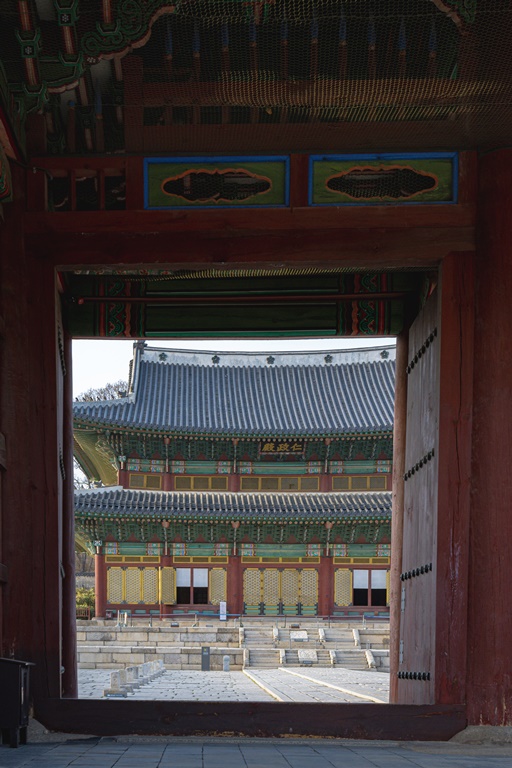
Introduction
Injeongjeon Hall served as the formal throne hall where the king conducted important affairs of state.
Its main functions included:
Royal enthronement ceremonies
Reception of foreign envoys
Major national rituals and official court gatherings
As such, it symbolized royal authority and the political order of the Joseon Dynasty.
🏛️ Interior Structure
The interior of Injeongjeon is designed to emphasize hierarchy, symbolism, and royal power.
- Open Hall Structure
Although it appears as a two-story building from the outside, the interior is a single, tall open space
High ceiling creates a sense of grandeur and authority
Wooden columns support the structure while keeping the central area open - Royal Throne Area
The king’s throne (eojwa) is placed at the rear center of the hall
Behind the throne stands the folding screen known as
→ Irworobongdo
symbolizing the universe and the king’s divine authority
Above the throne is an ornate canopy (called dajip) emphasizing the king’s sacred status - Officials’ Space
The front area of the hall is left open
Court officials stood here during ceremonies
No permanent seating, as the space was used for formal rituals - Decorative Elements
Interior decorated with traditional Korean dancheong (multicolored paintwork)
Motifs include dragons, clouds, and phoenixes representing royal power
Exposed wooden framework highlights traditional construction techniques
📌 Summary
Injeongjeon is not just an architectural structure—it is a symbolic space where:
The king sits at the center of authority
Officials stand in hierarchical order before him
The layout itself expresses the political and cosmic order of the Joseon Dynasty
당신이 좋아할 만한
Changdeokgung Palace Seoul

Sorae Wetland Ecological Park Incheon